- Home
- Gov
- Departments
- Public Works
- Storm & Sewer
- Community Flood & Storm Protection Initiative
Community Flood & Storm Protection Initiative
Property Owners Approve Stormwater Protection Fee
Property owners in the City of San Mateo voted in favor of the Community Flood and Storm Protection Fee, a testament to the commitment of residents to the community’s collective safety and well-being. Read more in a news release.
Important Information about the upcoming Stormwater Fee
When can I expect to see the Fee?
- The fee will be a component of your property tax bill beginning this Fall 2024.
How Much Is the Proposed Fee?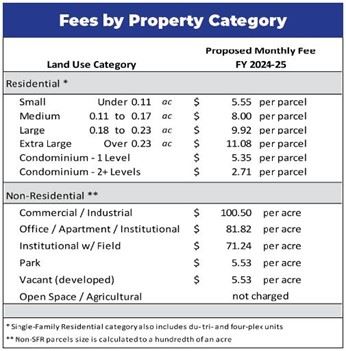
- The schedule of proposed rates is summarized in the table to the right. The monthly fee for a single-family home on a medium-sized parcel between 0.11 and 0.17 acres, (the most common size of residential parcel), would be $8/month.
How Was the Fee Determined?
- The fee is based upon a property’s use of the system, and the volume of water runoff generated by each parcel or category of parcel.
- The rate for residential is based on the size of the parcel. The rate for non-residential is based on the amount of impervious surfaces (such as pavement) on a property.
- Rates for non-residential property categories are based on their percent of impervious surface compared to a single-family home.
How is the Fee Calculated in the Future?
- The fee can never exceed the projected cost of services and improvements.
- To offset the effects of inflation on labor and materials costs, the maximum rate increase is based on the change in the Consumer Price Index and cannot exceed 3% in any single year.
- If the CPI increase is more than 3%, the “Unused CPI” may be used to increase the rate in years when the CPI is less than 3%, but the fee increase still cannot exceed 3% in any year.
- Every year, the actual fee amount must go through a public process and can only be changed by the City Council, based on the real projected program revenues and costs.
Stormwater Infrastructure - Safer Today, Stronger Tomorrow
Why Is Stormwater Infrastructure So Important?
Protecting Residents and Businesses from Flooding
Safe communities need robust stormwater systems to protect residents and businesses from flooding.
- When stormwater is managed effectively, it is channeled away from homes and businesses and safely into waterways or storage facilities
- When streets and other low-lying areas become flooded, the water can quickly rise to dangerous levels
- Flooding can be costly
- Flooding can also disrupt critical infrastructure such as power, water, and transportation systems, which can create further safety risks for residents.
Our stormwater system is comprised of:
- 130 miles of storm drains
- 20 miles of open creeks and drainage channels
- One flood control lagoon
- Ten pump stations
- Three-mile Bayfront levee
- Future storms will be more intense, putting more pressure on the City’s stormwater infrastructure. Through careful planning, we can build resilience in the face of climate change and aging infrastructure. Safer today, stronger tomorrow.
Review our FAQs and the July 2023 Stormwater Fee Report to learn more.
Find out about more immediate steps the City is taking to be prepared for the next rainy season and how residents can be prepared on our Flood Preparedness web page.
Dedicated Resources to Protect Our Community
A dedicated revenue source would fund repairs and improve aging infrastructure, so residents and businesses can be better protected from flooding.
- During heavy rain events, stormwater can overwhelm the existing
system and cause flooding. Stormwater management systems, including levees and pumps, can help prevent flooding and protect communities from damage caused by severe storms.
- System failures happen more frequently with aging infrastructure, leading to worsened flooding conditions over time.
- Recent large storm events have highlighted the City's aging infrastructure deficiencies.
Keeping Our Water Clean Keeps Us Safe
Properly managed stormwater systems protect the health and wellbeing of local residents, wildlife and habitats by reducing pollution in our local waterways and the San Francisco Bay.
Properly managed stormwater systems can filter out pollutants and trash from stormwater runoff before it enters local waterways and the San Francisco Bay, protecting aquatic life and habitats.
We are required by law to prevent contamination of stormwater by utilizing clean work practices, inspecting businesses and construction activities, and educating the public. We are a member of a comprehensive countywide effort to prevent stormwater pollution. For more information, visit San Mateo Countywide Water Pollution Prevention Program.
Resource to Build Resiliency
Stormwater can become a resource for community development, rather than a nuisance, when stormwater management systems have the funding and support needed for innovative and sustainable solutions.
Marina Lagoon
The Marina Lagoon (Lagoon) is part of the City’s stormwater system. This aquatic gem provides flood control and recreation to the entire community, as well as wildlife and ecological benefits. Significant improvements and lagoon dredging are needed to protect these benefits.
Sustainable stormwater management promotes healthier and more resilient ecosystems, and can create new opportunities for recreation and habitat restoration.
Green Infrastructure
 Green Infrastructure allows rainwater to soak and filter into the ground, reducing the quantity of water and pollutants flowing into local creeks.